

A bathroom renovation in Toronto area is one of the most impactful home improvement projects you can undertake. Whether you’re updating an existing space or building a new one from scratch, thoughtful planning, smart design choices, and high-quality execution make all the difference. Bathrooms are daily-use spaces that must balance aesthetics, durability, accessibility, and long-term value. The good news is that a well-executed bathroom renovation can transform your daily routine, boost your home’s comfort, and increase property resale appeal.
At Violet Build Toronto, we help homeowners in Toronto and the GTA navigate bathroom renovation projects from concept to completion. By applying insights from experienced design and construction professionals, this guide highlights practical renovation tips that ensure your bathroom delivers both style and performance.
Start With a Clear Plan and Goal
The first step toward a successful bathroom renovation is establishing your priorities. Begin by asking yourself what you hope to achieve with the space. Are you aiming to modernize an outdated bathroom, expand space for comfort, improve accessibility with universal design, or simply add more storage? Understanding your goals sets a foundation for design decisions, budget allocation, and project scope.
Consider how you use the bathroom daily. For example, a family bathroom may require durable surfaces and easy-to-clean finishes, while a master ensuite might prioritize luxurious features like a walk-in shower or freestanding tub. Taking the time to define your objectives early helps streamline the entire renovation process.
Set a Realistic Budget
Budgeting is more than assigning a number; it’s about balancing priorities and recognizing realistic costs. A bathroom renovation involves elements such as demolition, plumbing, electrical work, cabinetry, fixtures, flooring, and finishes. Each decision affects the overall investment.
When setting your budget, build in a contingency for unexpected surprises. Many bathroom renovations uncover hidden issues behind walls or under floors, such as outdated plumbing, moisture damage, or non-compliant wiring. Planning for a buffer of 10–15% above your expected costs helps reduce stress if adjustments are needed.
Working with renovation professionals early in the process gives you insight into realistic cost expectations for materials and labour. This collaborative approach allows you to make informed decisions aligned with your financial goals.
Maximize Function With Smart Layout Design
Good design begins with an efficient layout. Even in smaller bathrooms, thoughtful planning can enhance usability and comfort. The placement of major elements such as the toilet, shower, tub, vanity, and storage impacts how smoothly your bathroom functions.
If you’re satisfied with your existing layout, consider whether the current arrangement maximizes space flow. When making layout changes, be mindful that moving plumbing fixtures often increases renovation costs. In many cases, repositioning smaller elements or updating fixtures within the existing layout achieves significant improvement without major structural changes.
Think about how people move through the space. For example, clear paths to the shower and toilet, adequate clearance around the vanity, and logically arranged storage contribute to a space that feels both open and practical.
Choose Durable, Long-Lasting Materials
Bathrooms are exposed to moisture, humidity, and frequent use, so selecting materials that withstand these conditions is essential. Porcelain and ceramic tiles are popular choices for flooring and shower walls because they resist water and are easy to maintain. Similarly, quartz countertops offer long-lasting performance and resist staining better than natural stone in high-use wet environments.
When selecting cabinetry and shelving, look for moisture-resistant materials or finishes that prevent warping and degradation. Avoid materials that absorb water or deteriorate easily under consistent moisture exposure. Flooring should be slip-resistant and durable, especially in family bathrooms or homes with children and seniors.
Durable materials might carry higher upfront costs, but they save time and money in maintenance and replacement over the long term.
Prioritize Lighting and Ventilation
Lighting and ventilation are two often-overlooked elements that significantly affect both function and comfort. Good lighting makes a bathroom feel larger and more inviting, while proper ventilation prevents mold, mildew, and moisture-related damage.
Layered lighting—ambient, task, and accent—creates a well-lit space suited for daily routines. Vanity lighting should avoid harsh shadows, while ceiling lights or recessed fixtures provide general illumination. Natural light is a bonus when possible, so consider how windows or skylights can brighten the room.
Ventilation is equally important. A quality exhaust fan removes excess moisture, reducing the risk of mold growth and protecting finishes over time. Proper ventilation also improves indoor air quality and overall comfort.
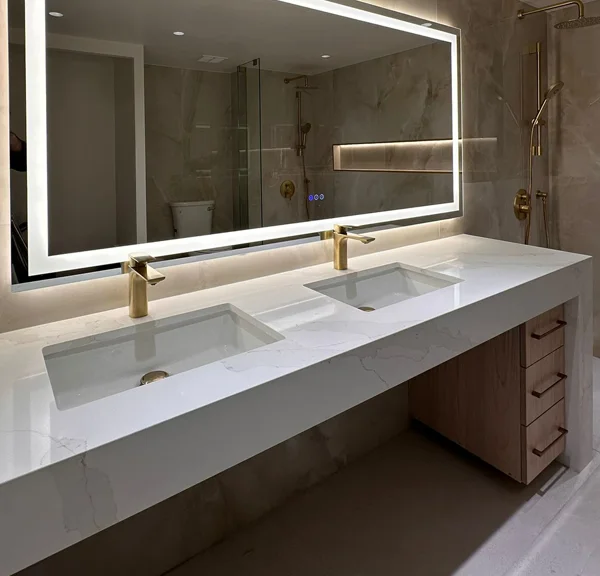 Invest in Quality Fixtures and Hardware
Fixtures and hardware are not just functional components—they play a major role in defining the overall look, feel, and performance of your bathroom. Choosing high‑quality faucets, showerheads, handles, and drains enhances both water efficiency and long‑term satisfaction. Modern fixtures now include features like low‑flow technology, adjustable spray patterns, thermostatic controls, and ergonomic designs that elevate comfort while reducing water consumption.
Beyond performance, the visual impact of your hardware matters. Finishes such as brushed nickel, matte black, polished chrome, or even trending options like champagne bronze should complement your design vision and withstand daily wear. Coordinating finishes across faucets, towel bars, shower trims, and cabinetry hardware creates a cohesive, intentional aesthetic that instantly elevates the space.
Quality fixtures also offer superior durability. They resist corrosion, mineral buildup, and mechanical failure far better than budget alternatives. Investing in reputable brands means fewer leaks, smoother operation, and components that maintain their appearance and functionality for years. While the upfront cost may be higher, the long‑term value—both in performance and reduced maintenance—makes premium fixtures a smart choice for any bathroom renovation.
Plan for Practical Storage Solutions
A bathroom’s usefulness depends heavily on how well it stores essentials. Effective storage helps reduce clutter, improves organization, and enhances usability. Consider built-in niches in shower walls, recessed medicine cabinets, tall linen cabinets, and under-sink drawers for daily items.
Floating vanities with drawers provide hidden storage while making the floor appear more open. If space is limited, vertical storage solutions such as shelving above the toilet or tall cabinetry in unused corners maximize capacity without crowding the room.
Balancing style and practicality ensures that storage solutions support both your design vision and daily routines.
Focus on Water Efficiency and Sustainability
Modern bathroom design increasingly emphasizes water efficiency and sustainability. Low-flow toilets, efficient showerheads, and faucets reduce water consumption without sacrificing performance. These upgrades not only support environmental responsibility but also contribute to lower utility bills over time.
Beyond fixtures, consider sustainable materials wherever possible. Recycled glass tiles, responsibly sourced wood cabinetry, and low-VOC (volatile organic compound) paints contribute to healthier indoor air quality and environmentally responsible design.
Planning for sustainability enhances the long-term value of your renovation while aligning with broader goals of energy conservation and responsible construction.
Prepare for Construction and Minimize Disruption
Bathroom renovations can be disruptive, especially in homes with limited bathroom access. Communicate your renovation schedule with family members or residents to coordinate usage and reduce stress during construction.
Preparing the space includes protecting nearby floors and fixtures from dust and debris and ensuring safe access for contractors. Clear the bathroom and adjacent areas of personal items before work begins.
Transparent communication with your renovation team about timeline expectations and site access helps maintain a smooth workflow.
Expect the Unexpected and Stay Flexible
Even with careful planning, unforeseen issues can arise once demolition begins. Hidden water damage, outdated electrical systems, or structural concerns may require adjustments to plans or timelines. While these discoveries can be inconvenient, addressing them promptly and correctly prevents future problems.
Working with experienced renovation professionals means having trusted guidance when unexpected challenges appear. Skilled contractors evaluate surprises, recommend solutions, and communicate how changes affect costs and timelines.
Flexibility helps you navigate surprises without sacrificing your project’s overall success.
Keep Communication Strong Throughout the Project
Clear communication between you and your renovation team is essential. Regular updates on progress, timelines, and any changes help ensure that the project stays on track and your expectations are met. Ask questions if anything is unclear, and discuss design or material decisions before making changes mid-construction.
A strong partnership with your renovation professionals fosters confidence and contributes to a more enjoyable renovation experience.
Enjoy the Transformation
A well-executed bathroom renovation enhances both daily living and property value. From improved functionality to modern design and long-lasting finishes, a thoughtfully renovated bathroom becomes a space you enjoy every day. Taking the time to plan, invest in quality materials, and work with trusted professionals pays off in comfort, aesthetics, and long-term satisfaction.
With careful preparation and smart design decisions, your bathroom renovation becomes more than a project—it becomes an investment in your home’s future.