
SERVICE
Home Renovation in Forest Hill
What It Really Takes to Get It Right
Forest Hill sits on a narrow strip of midtown Toronto between Spadina Road to the east and Bathurst Street to the west, roughly bounded by Eglinton Avenue and St. Clair Avenue. It is one of the most architecturally consistent neighbourhoods in the city — and one of the most demanding to renovate correctly. The homes here were largely built between the 1920s and the 1950s, predominantly in rough-cut limestone and brick, with Tudor revival detailing, steep rooflines, and interiors that feature original millwork, plaster ceilings, and layouts that reflect how wealthy Torontonians lived a century ago. Many sit on lots of 50 feet or wider along streets like Russell Hill Road, Dunvegan Road, Lonsdale Road, and Oriole Parkway — properties that have appreciated dramatically and carry expectations to match.
Renovating in Forest Hill is not like renovating in a newer subdivision. The physical realities of the housing stock, the regulatory environment, and the design expectations of the neighbourhood create a project profile that requires specific expertise at every stage.
The Heritage Conservation District Reality
Forest Hill is designated as a Heritage Conservation District (HCD) under the Ontario Heritage Act, which means that any exterior work visible from the street requires a Heritage Alteration Permit in addition to a standard Toronto building permit. This applies to window replacements, facade changes, additions, and any alteration to the roofline or front elevation. The City’s Heritage Planning staff review these applications separately, and the review process typically adds four to eight weeks to your pre-construction timeline on top of the standard permit path.
What this means practically: if you are planning a rear addition, a second-storey expansion, or even replacing original casement windows with a new profile, you are navigating two parallel approval processes before a single wall comes down. Many Forest Hill homeowners discover this only after signing with a contractor — resulting in delayed start dates and budget pressure. Working with a renovation team that understands the HCD requirements from day one eliminates that friction entirely.
For additions specifically, Toronto’s zoning bylaws add another layer. Many Forest Hill lots have older configurations that do not meet current setback or floor-space-index rules, which means a second-storey addition or a rear bump-out may require a minor variance through the Committee of Adjustment — adding a mandatory public notice period and potentially another three to four months to your timeline before permits can be issued.
What Renovations Actually Cost in Forest Hill in 2026
Forest Hill renovation costs sit at the higher end of the Toronto market, driven by the premium materials the neighbourhood demands, the complexity of working in older structures, and the skilled trades required to do the work properly.
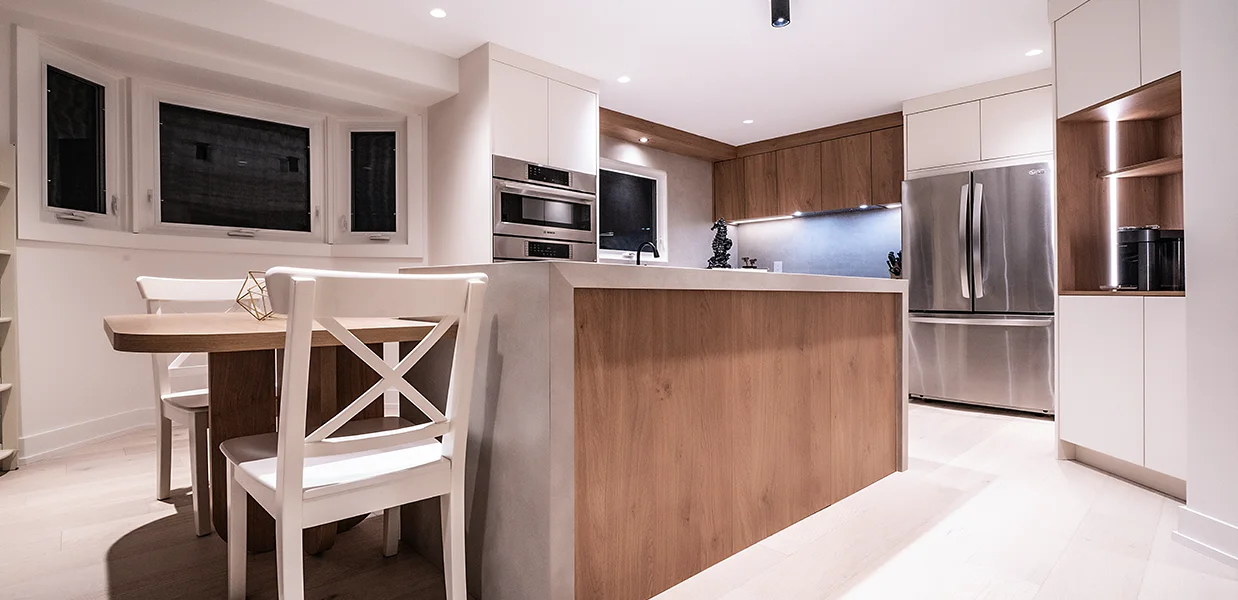
For kitchen renovations, budget $75,000 to $150,000 for a mid-range to high-end project in a typical Forest Hill home. Larger kitchens with custom full-height cabinetry, professional-grade appliances, stone countertops, and layout changes involving structural work can push past $200,000. The age of Forest Hill homes frequently surfaces surprises behind walls — knob-and-tube wiring, galvanized plumbing, and undersized electrical panels that need upgrading before modern kitchen systems can be installed.
Bathroom renovations in this neighbourhood range from $35,000 for a well-executed primary bath refresh to $80,000 or more for a full ensuite redesign with heated floors, a freestanding tub, a custom walk-in shower, and bespoke vanity millwork. Violet Build completed exactly that kind of transformation in a Forest Hill ensuite — a complete redesign featuring a walk-in shower, freestanding tub, and custom vanity, finished to move-in standard in just over ten days.
Basement renovations in pre-1960 Forest Hill homes carry a specific consideration that is easy to underestimate: most of these lower levels were built with minimal waterproofing and frequently need interior perimeter drainage or exterior membrane work before finish materials go in. A comprehensive basement renovation including moisture management, a new bathroom, and high-quality finishes runs $95,000 to $150,000 for a typical Forest Hill footprint. For homeowners converting to a legal secondary suite — an increasingly common use given Toronto’s rental market — expect to add another $20,000 to $40,000 for the plumbing, egress windows, and fire separation required under the City’s updated secondary suite by-laws.
Home additions are the most complex and most rewarding projects in this neighbourhood. Rear additions and second-storey expansions start at approximately $280,000 and can reach $550,000 or more for luxury finishes at $450 to $550 per square foot. The premium is real, but so is the return — Forest Hill property values make well-executed additions one of the strongest renovation investments available anywhere in Toronto.
The Design Challenge Specific to Forest Hill
The homes on Oriole Parkway and Dunvegan Road did not become architecturally significant by accident. Original builders used rough limestone exteriors, mahogany interior detailing, solid wood floors, and plaster wall profiles that give these homes their character. A renovation that ignores those elements — that replaces original wood trim with MDF profiles, covers plaster ceilings with pot lights, or imposes a contemporary open-concept on a layout that was designed around formal rooms — typically produces a result that neither respects the home’s history nor satisfies modern living standards.
The most successful Forest Hill renovations hold two things in tension simultaneously: preserving the exterior integrity and original architectural features that the HCD guidelines protect and that buyers in this market expect, while transforming interiors into genuinely modern, functional spaces that reflect how families actually live today. Open kitchen-living areas where walls have been removed carefully, with structural steel properly engineered and detailed to match the original material palette. Primary bathrooms that introduce contemporary luxury without the generic hotel aesthetic. Basements that feel like intentional living spaces, not afterthoughts.
This is the kind of work that requires a team comfortable with both heritage sensitivity and contemporary design — and a project management structure capable of coordinating architects, structural engineers, heritage consultants, and skilled trades within a timeline that respects the constraints of an occupied neighbourhood.
Why Full Project Management Is Non-Negotiable Here
Forest Hill renovation projects regularly involve five or more distinct trade disciplines working in sequence across timelines measured in months. A full home renovation in this neighbourhood typically requires an architect for permit drawings, a structural engineer for any wall removals or addition foundations, heritage review coordination, and then the sequenced execution of demolition, framing, mechanical rough-ins, insulation, drywall, finish carpentry, flooring, and fixture installation.
Without experienced project management holding all of that together — coordinating trade schedules, managing material lead times, maintaining quality control across disciplines, and communicating clearly with the homeowner at every stage — the gaps between trades are where projects go sideways. Timeline slippage, cost overruns, and coordination failures are almost always the product of a management gap rather than a craft problem.
Violet Build’s approach to kitchen renovations, bathroom renovations, basement finishing, and home additions in Forest Hill and across midtown Toronto is built around exactly that kind of end-to-end accountability. One team, one point of contact, and a fixed-scope commitment that protects homeowners from the budget creep that is endemic to renovation projects managed by the homeowner directly.
If you are planning a renovation in Forest Hill and want to understand what your specific project involves — scope, timeline, permits, and realistic cost — a no-obligation discovery call with the Violet Build team is the right first step. Every Forest Hill home has its own structural personality and its own potential. The conversation starts there.
FAQs
How long does a home renovation in Aurora usually take?
The timeline for a home renovation in Aurora depends on the size and complexity of the project. Smaller renovations such as bathrooms or kitchens may take a few weeks, while full home renovations can take several months. The process typically includes planning, design, permits, construction, and finishing. Working with an experienced renovation company ensures the project stays on schedule and meets local building requirements.
Do I need permits for a home renovation in Aurora?
Many renovation projects in Aurora require permits, especially when structural, plumbing, or electrical work is involved. Renovations such as removing walls, building additions, or major remodeling usually need approval from the municipality. A professional renovation contractor can help manage the permit process and ensure all work meets Ontario building codes and regulations.
What types of home renovation services are available in Aurora?
Home renovation services in Aurora can include full home renovations, kitchen remodeling, bathroom upgrades, basement finishing, and home additions. These projects are designed to improve functionality, comfort, and property value while creating a space that reflects your lifestyle and design preferences.
How much does a home renovation in Aurora cost?
The cost of a home renovation in Aurora varies depending on the scope of the project, materials used, and the size of the home. Minor renovations may cost a few thousand dollars, while full home renovations can be significantly higher. A professional consultation helps determine the best design options and provides a detailed estimate tailored to your renovation goals.